About

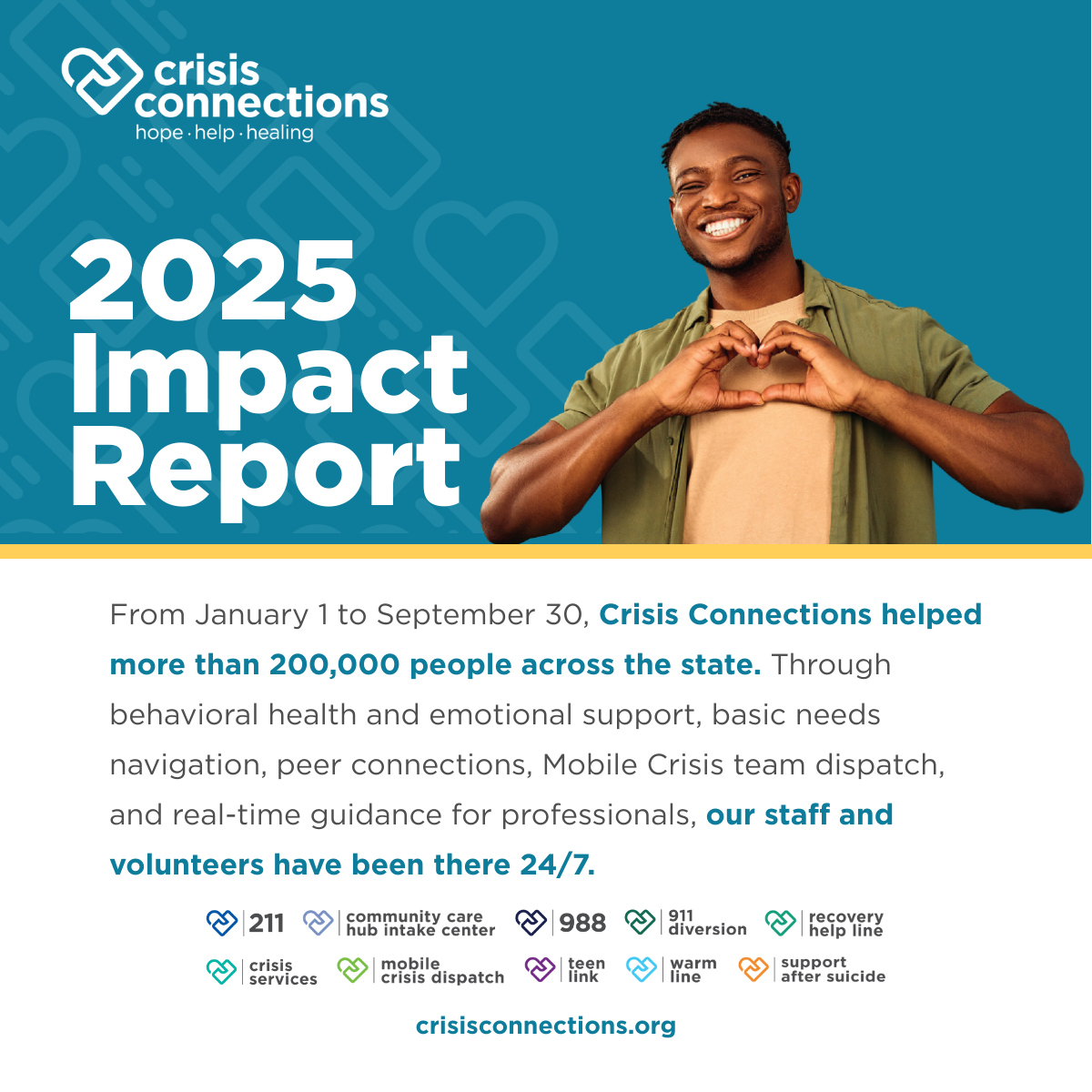
Providing human connection for over 650,000 people every year
For more than 60 years, Crisis Connections has created pathways to critical resources and crisis support for help seekers in our community. We deliver expert care to people who are struggling with loneliness, depression, substance use disorder, recovery, and many other life challenges.
Our programs identify individual needs and respond with whole-person care that results in improved individual outcomes. Crisis Connections fills the gaps in the human services and mental health systems—providing a safety net for help seekers and reducing the impact on our strained system.
By addressing the root causes of crisis, we are contributing to building a strong, resilient community.
Our Mission
Hope. Help. Healing.
To foster resilience and well-being for all by connecting people to accessible and compassionate support.
Our Values
Our programs and impact
Crisis Connections believes human connection is key to crisis care and response, and to navigating basic needs resources. We operate over 10 programs within Washington State for individuals, professionals and organizations in need of whole person support during the most difficult times of their lives. Learn more about our leadership team, our history, programs, and our impact.


Land & Labor Acknowledgement
We at Crisis Connections acknowledge that we are located on the ancestral lands of the Coast Salish, Duwamish, Muckleshoot, and Stillaguamish Peoples. We honor with gratitude the land itself and the First Nations Peoples who have stewarded it, past and present.
We also acknowledge the legacy of slavery in our country and the enslaved African people whose labor was exploited for generations to help establish the economy of the United States. We are indebted to their labor and their sacrifice, and we must acknowledge the tremors of that violence throughout the generations and the resulting impact that can still be felt and witnessed today.
This acknowledgement does not take the place of authentic relationships with Black and Indigenous communities but serves as a first step in honoring the land we are on, the history it holds and the labor of those enslaved and in indentured servitude in building our country – for which we benefit from each day.