2025 Annual Report

Michelle McDaniel
Chief Executive Officer
A Note From Our CEO
Every year, Crisis Connections shows up for our community with the same purpose: fostering resilience and wellbeing by making sure accessible, compassionate support is never out of reach. In 2025, that purpose was tested like never before and every day, our team showed up to meet it.
We hold fast to our promise: no one will face life's challenges alone. For the last 3 years, that promise has taken shape through our two strategic pillars, the commitments that guide our programmatic innovations. The first is “Right Response, Right Time”: making sure a help seeker reaches the specific kind of support they need, the moment they need it. In 2025, our 911 Diversion program redirected 3,408 calls to 211 or 988 instead of police or emergency medical services dispatch, connecting people to crisis counselors and resource navigators rather than routing them into systems that weren't built to properly address those needs.
The second pillar is “Whole Person Care”, recognizing that a mental health or substance use crisis is rarely just one thing. It's often tangled up with housing instability, hunger, or a missed medication refill. We don't just answer the moment in front of us; we look at the whole person on the other end of the line.
Dear Supporters,
Every year, Crisis Connections shows up for our community with the same purpose: fostering resilience and wellbeing by making sure accessible, compassionate support is never out of reach. In 2025, that purpose was tested like never before and every day, our team showed up to meet it.
We hold fast to our promise: no one will face life's challenges alone. For the last 3 years, that promise has taken shape through our two strategic pillars, the commitments that guide our programmatic innovations. The first is “Right Response, Right Time”: making sure a help seeker reaches the specific kind of support they need, the moment they need it. In 2025, our 911 Diversion program redirected 3,408 calls to 211 or 988 instead of police or emergency medical services dispatch, connecting people to crisis counselors and resource navigators rather than routing them into systems that weren't built to properly address those needs.
The second pillar is “Whole Person Care”, recognizing that a mental health or substance use crisis is rarely just one thing. It's often tangled up with housing instability, hunger, or a missed medication refill. We don't just answer the moment in front of us; we look at the whole person on the other end of the line.
In 2025 alone, 729,871 people reached out to Crisis Connections for help. Here's what that looked like this year:
- Our crisis and resource lines connected 364,079 people to basic needs resources.
- 219,170 people received direct crisis support.
- We dispatched Mobile Crisis Teams 6,129 times for emergency in-person support.
- 27,680 adults and youth received mental health and suicide loss peer support.
- 109,111 first responders and mental health professionals consulted with our team to ensure the best response for a community member they were supporting.
Increasingly, we watch affordability become a crisis of its own. In 2025, help seekers told us about impossible choices — rent or medication, groceries or utilities — in ways we hadn't heard as often before. At the same time, changes to federal programs like the Affordable Care Act and SNAP have begun narrowing the safety net many of our neighbors depend on. Fewer people have consistent access to insurance and healthcare. Fewer families can count on steady food assistance. We see the consequences of these policy changes daily, in the voices of the people who call, text, and chat with us. That reality makes our work more essential, not less.
Every one of these connections is a reflection of the complex pressures our community is under — and the power of meeting people exactly where they are. We don't just answer calls, texts and chats; we listen without judgment, respond with expert care, and guide people toward the right help at the right time.
None of this would be possible without you — our donors, community partners, volunteers, and champions. Your belief in our work sustains every connection we make, every resource we share, and every life we touch.
As it has been since our founding in 1964, we remain committed to being the steady place our community can turn to, no matter the time of day or the shape of the need. Thank you for making sure that no one faces life's challenges alone.
With deep appreciation,

Michelle McDaniel
CEO
Real Programs. Real People.
Reach Across the State
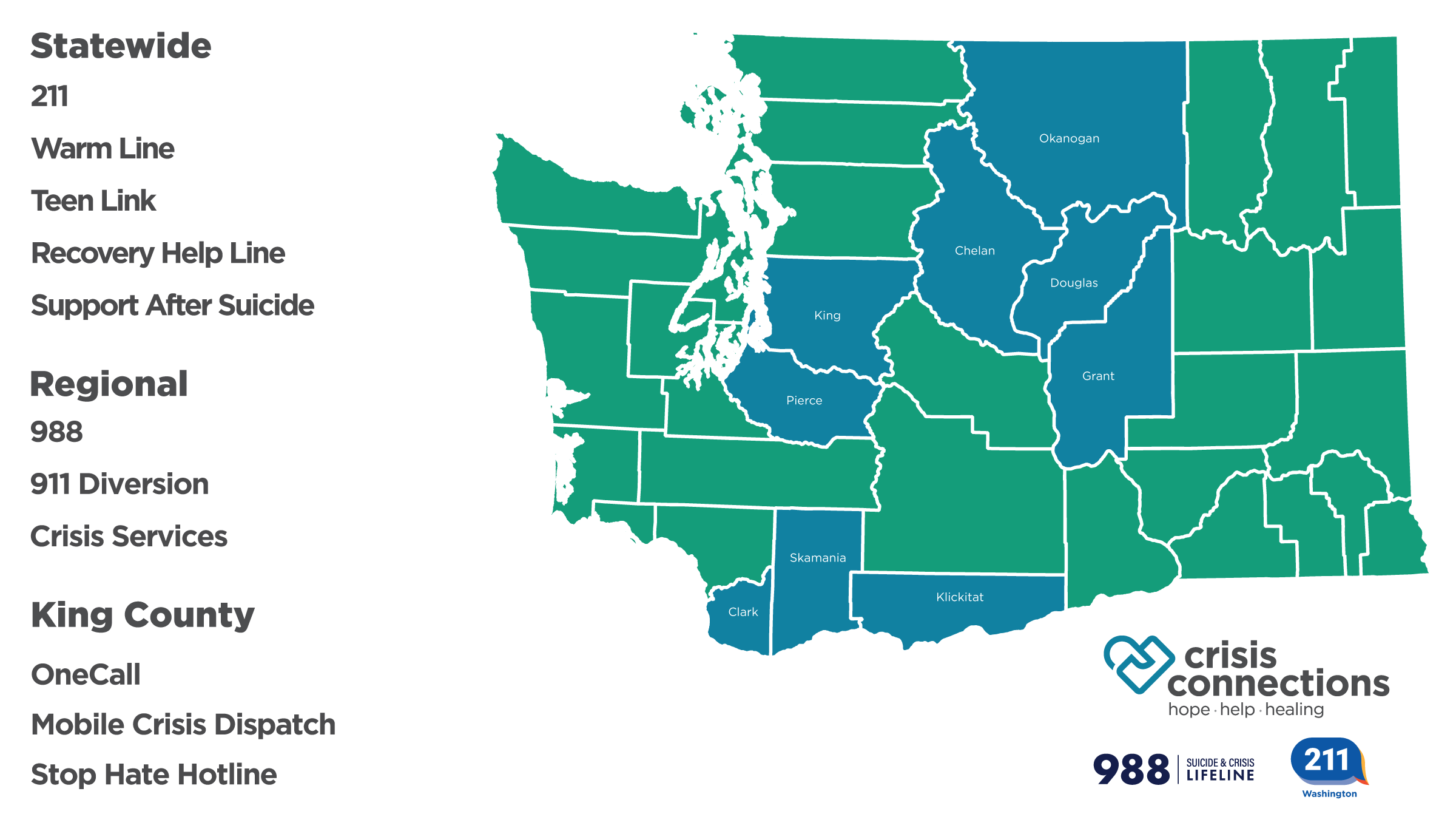

Expanding Across Washington
Mobilizing in Emergencies
In 2025, Crisis Connections became the statewide provider of 211 and met the moment by mobilizing with Airbnb.org to provide temporary housing to thousands of people displaced by catastrophic flooding. Throughout the response, 211 connected flood survivors with critical resources while also serving help seekers statewide with everyday basic needs.
An Elma caller whose family was displaced by flooding reached out for cleaning supplies and to ask whether her Airbnb.org stay could be extended. She shared how grateful she was to have a safe place to go after escaping foot-deep floodwater in her Kia with her adult son, two dogs and two goats—who later chewed up the car while the family was staying at the Airbnb.
After answering the quarterly questions, she said, “Thank you very much. Just having someone to listen to our story is really helpful!”
A Community Living Connections help seeker in Yakima had become the primary unpaid caregiver for her mother after multiple hospitalizations left her needing significantly more care. With few opportunities to leave home or rest, she reached out for support and was connected with emergency respite services.
“I’m so glad I was able to talk to you today. Life has been so hard lately, and you were able to relieve a great amount of stress from my shoulders. I’m going to use these hours to get some rest, fill up my tank again, and start making a plan for my mom’s care moving forward. I am truly grateful.”
A young LGBTQ+ help seeker experiencing homelessness in Moses Lake called 211 for housing assistance. Although housing resources were limited, the specialist was able to pivot and connect them with other helpful information.
After the call, they shared:
“I would highly recommend 211 to any human looking for services.”
A domestic violence survivor reached out to 211 looking for shelter and permanent housing options in Carnation. After speaking with a specialist and reviewing available resources, she shared:
“I don’t know why I was terrified to make this call. I feel a lot better now. Thank you so much for helping.”
A family that operates a small farm and petting zoo in unincorporated King County reached out to 211 for financial assistance after flooding damaged their property. After connecting them with available resources, they shared:
“All of my neighbors lost their homes. We lost our barn, other structures, and our fences, but somehow our home was fine. We called for help for our animals, too, but it took 12 hours for the sheriffs to reach us. They told us to paint X’s on our horses and let them go because they were swimming. We lost all of our chickens. We never expected anything like this. Thank you for the work you do—this is more than I ever would have expected.”
A help seeker in Auburn who had recently moved into permanent housing after months of searching was forced to evacuate when the Green River flooded their backyard. After connecting with 211 for support, they shared:
“We lived in Airbnbs before finding our permanent home, and now we had to evacuate. I can’t even believe this. This is awesome! It gives me hope that there are people out there who care.”
A help seeker in North Bend reached out to 211 looking for low-cost or free legal resources related to child guardianship. After being connected with several resources, she shared:
“It was a great experience calling 211. Thank you for the resources provided.”
Our Programs

Growth in Washington
A proven track record of excellent clinical care
In December 2025, Crisis Connections was selected to expand 988 service as the primary provider in the Southwest, Pierce County and North Central regions, while continuing to serve King County. The contract was awarded based on our proven track record of excellent clinical care and consistently meeting service level agreements with funders. Work begins in 2026 to thoughtfully transition Regional Crisis Line services to 988 in partnership with Volunteers of America of Western Washington.


"I lost my son to suicide, and the Support After Suicide Loss program has been instrumental in helping my family and me walk through the grief."
-Suicide loss survivor who received care through virtual support groups
"That's exactly what is needed. Someone to just talk to, to help with the next step. This is important work. Thank you."
-Help seeker who needed to process and found relief through their talk with a 988 specialist
"Some days are harder than others. I am just paralyzed in bed with depression. On those days, I call you. It is the hope I need."
-Peer support help seeker who relies on Warm Line volunteers through their mental health recovery journey"I called not knowing what to expect, but the compassion I received gave me strength to face my problems."
-First time help seeker who reached out for mental health support
"I've had so much anxiety the past few days about my light bill. I feel so much better now, knowing that there is potential help out there and that I was able to talk to a live human to get things going."
-Single parent help seeker glad referred to utility payment resources"I didn't know how to deal with the grief after losing my sister. Some days I still don't. But you've helped guide me towards healing."
-Help seeker supported through her feelings of grief and offered coping strategies for tough days
"I'm really happy I did this, it made me feel a lot better."
-Teen help seeker who reached out via chat for youth peer support"It's a comfort to talk to someone who understands what it's like to live with a mental illness. The Warm Line is an anchor for me."
-Help seeker who reaches out for compassionate peer support regularly"These may seem like small costs but they all add up, thank you providing some financial help for more than I called about."
-Help seeker provided with resources for personal care
"My sister's addiction was tearing our family apart. Your Recovery Help Line helped us understand and find a way to support her."
-Loved one connected to treatment resources for their sibling"Teen Link is a resource we recommend almost every day. It empowers teens to take the first step towards help."
-Middle school counselor who refers youth to Teen Link and uses Where to Turn for Teens resource guide and database"After the loss of my wife, I didn't know where to turn. Without her income I am struggling financially. I was so overwhelmed when I called. Your kindness and the resources you gave helped me to have hope again."
-Grieving spouse connected to financial support referrals"During my transition, I had questions I couldn't ask anyone. Teen Link helped me without judgment."
-Trans teen help seeker who found care and connection at Teen Link"Finding someone who listened and understood my struggle with addiction was a ray of hope."
-Help seeker connected to treatment resources
Community Living Connections
"Thank you for making me feel safe and secure."
-Older adult help seeker
“My teen was bullied, and I felt helpless. Teen Link gave them a place to speak freely and safely. Thank you.”
- Parent of Teen Link Help Seeker
2025 At-a-Glance
By the Numbers
733,198

75,282

364,079
219,170

109,111

27,680

3,407

6,129

Impact

Together, We Stop Hate
Opening the Lines for Trauma-Informed Hate Crime and Bias Incident Reporting
Crisis Connections and King County collaborated to stand up the Stop Hate Hotline in October 2025. The 24-hour, confidential, trauma-informed support line gives people who experienced or witnessed hate crimes or bias incidents a safe place to be heard, supported and connected to help beyond a report.
With support in more than 200 languages, help seekers can also be connected to 988, 211, our peer lines and other community resources.
Michelle McDaniel, CEO of Crisis Connections, said the organization has been a trusted resource for more than 60 years.
"We are pleased to partner with King County on the Stop Hate Hotline to ensure those experiencing or witnessing hate have somewhere they can call to be heard and supported," McDaniel said.
King 5, October 2025"Between 2018 and 2023, the King County Prosecuting Attorney's Office (KCPAO) filed more than 270 hate crime charges, which peaked during the pandemic in February 2021. Researchers found that hate crimes against Asian Americans were exacerbated during that time. There were seven hate crime prosecutions in 2024. Since this year, 21 hate crime cases referred by police have been charged by prosecutors. Nine cases involved anti-race/ethnicity, and the majority of the rest of the cases involved anti-sexual orientation and anti-gender/gender identity. Two anti-national origin cases were also prosecuted."
South Seattle Emerald, November 2025"It's unfortunate to need something like this, but we're glad that we could build something that will be really effective for the community," Office of Equity, Racial, and Social Justice (OERSJ) Director Monisha Harrell said.
"It's helpful for us to see where these incidents are bubbling up," Harrell said. "We've seen historically that hate speech leads to increases in hate crimes."
South Seattle Emerald, November 2025The idea for the hotline originated from legislation introduced in 2022 by King County Councilmember Reagan Dunn, aimed to make it easier and safer for people to come forward and report hate-based crimes.
“Hate crimes are widely underreported, and this hotline creates a vital pathway for victims to safely come forward,” said Councilmember Dunn
KIRO 7 Seattle, October 2025
In the Community
Contributors
Subscribe to our email newsletter
Financials
Revenue
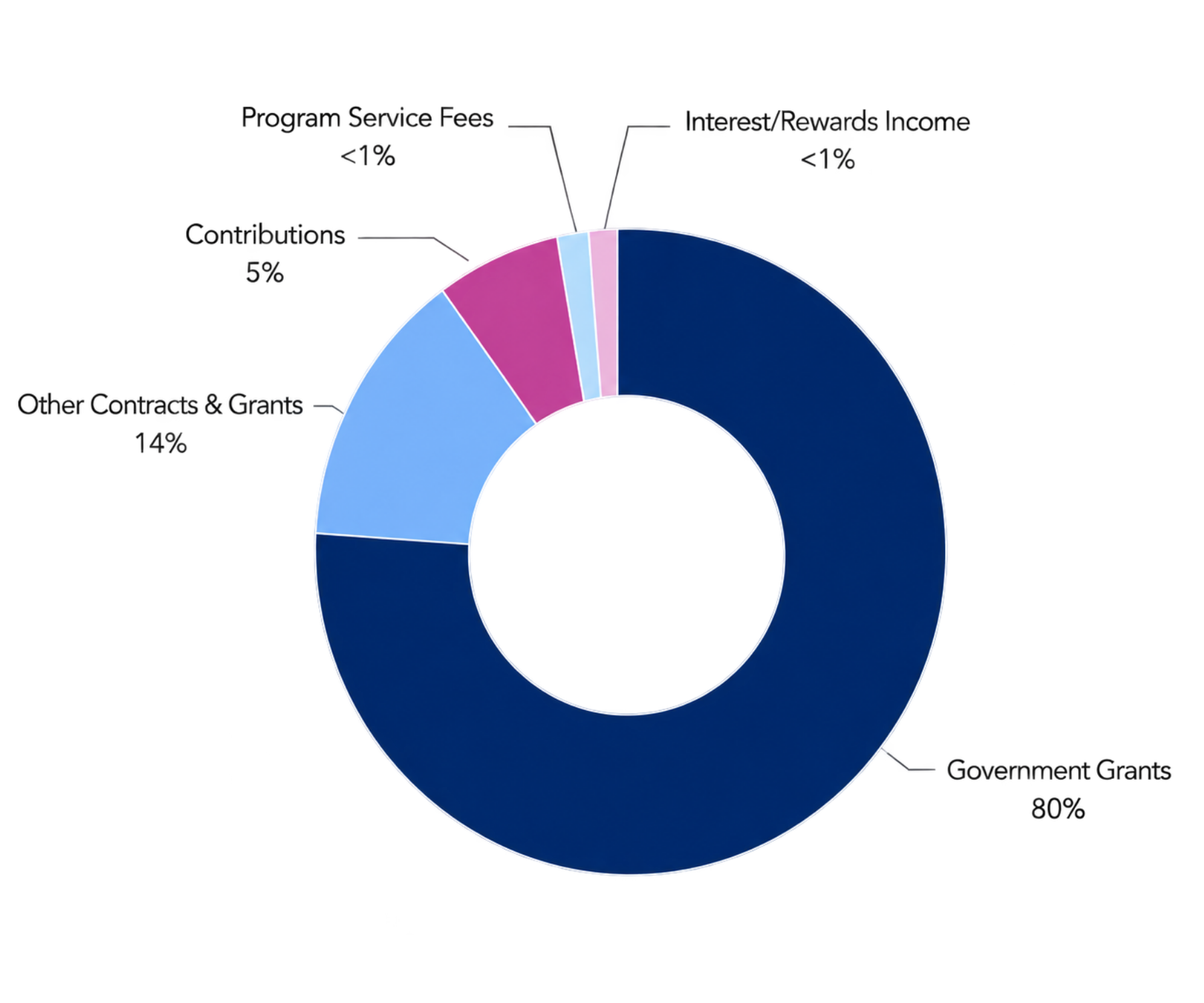
Total Revenue: $31.5M
Expenses
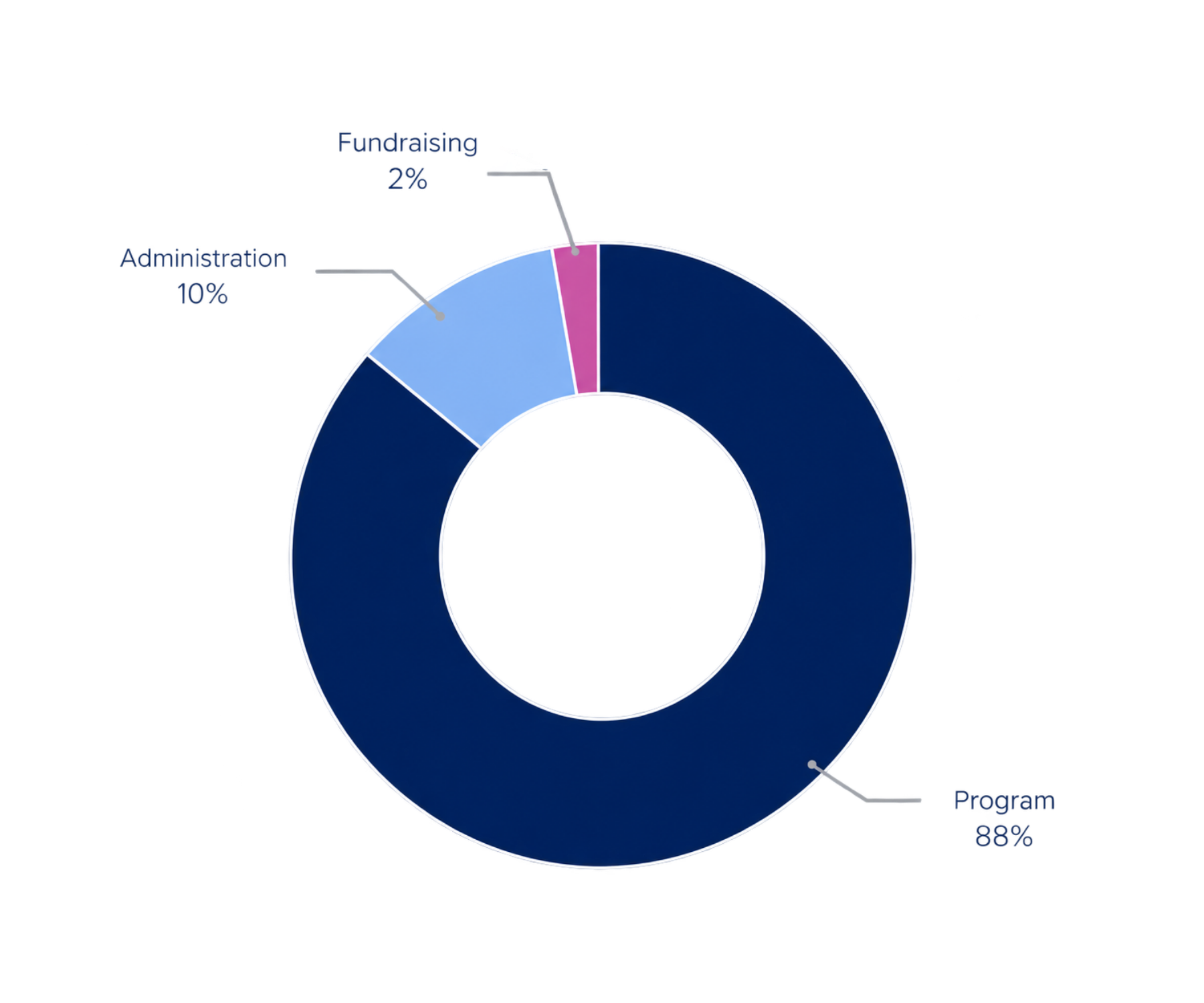
Total Expenses: $30M
Crisis Connections is a non-profit 501(c)(3) organization and all donations are tax-deductible to the extent allowed by law.
Our federal tax ID number is 91-0773187.
You can donate online or, if you prefer, by sending a check to:
Crisis Connections
PO Box 19612
Seattle, WA 98109
For questions, please contact us at fundraising@crisisconnections.org